Before the Grapes: Napa Valley's Agricultural Past |
Long before vineyards dominated the landscape, Napa Valley was known for wheat, cattle, orchards and prunes. An upcoming event at Bale Grist Mill brings that forgotten history back to life. |
Imagine driving through Napa Valley and seeing fields of golden wheat where vineyards now stretch toward the mountains. Instead of winery signs, you might pass cattle ranches, walnut groves, pear orchards and acres of prune trees.
That was once a familiar sight. While Napa Valley is now known worldwide for its wine, its agricultural history is much more varied. In fact, Napa County's own agricultural records report that by 1889 it was California's second-largest wheat producer.
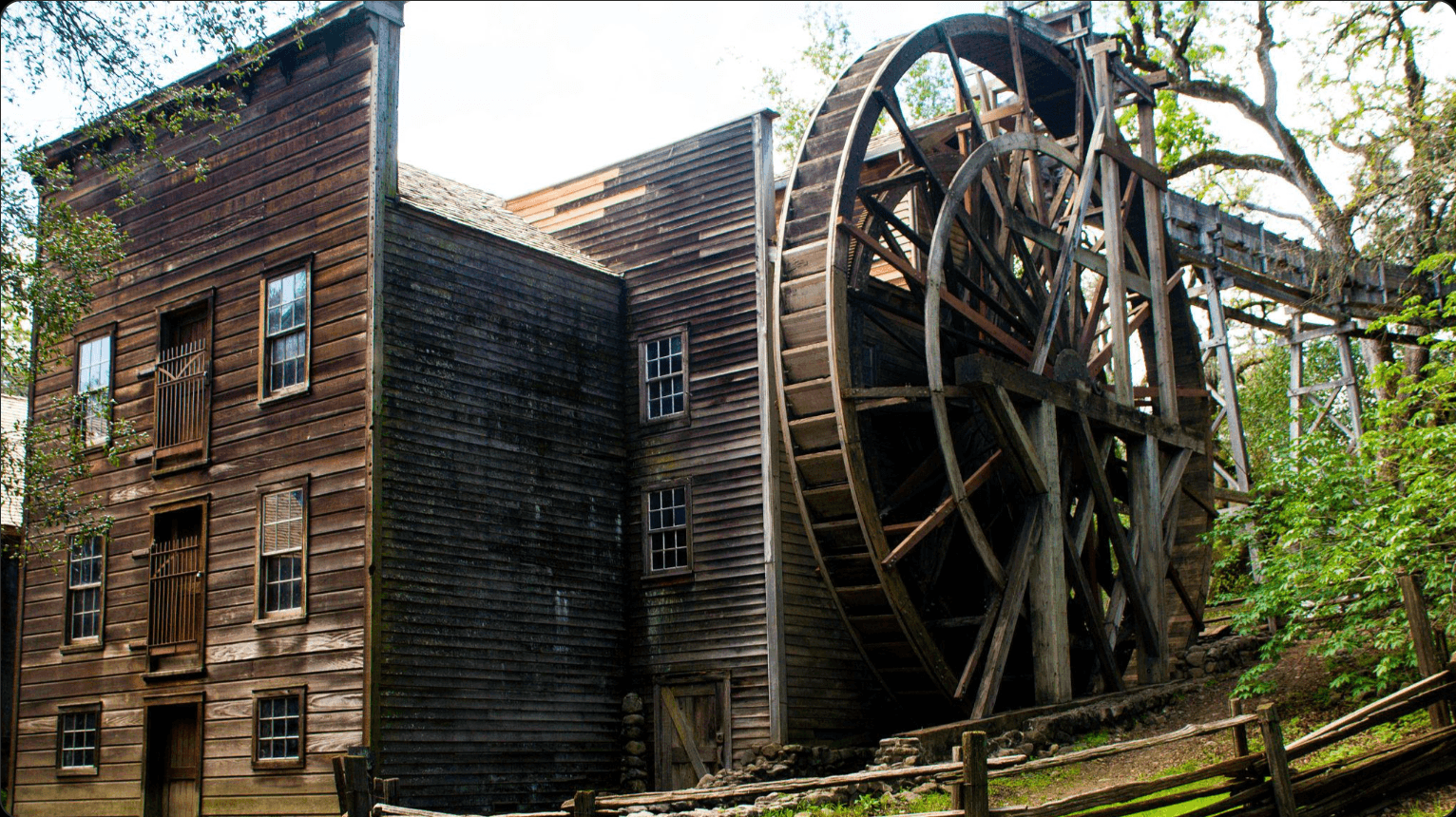
And some of that history is still alive. At Bale Grist Mill, just north of St. Helena, a massive wooden waterwheel still powers the machinery that once turned local farmers' grain into flour.
When Wheat Was King
Before European settlement, Indigenous communities, including the Wappo in the upper Napa Valley, had lived on and cared for the land for thousands of years.
They harvested native foods, made baskets and fashioned tools from locally available obsidian. The valley's agricultural history did not begin with its first European farms.
During the Mexican rancho period of the 1820s through the 1840s, cattle ranching became an important part of the region's economy. Wheat and other grains followed, along with the valley's first orchards.
As California's population grew during the Gold Rush, Napa's agricultural economy expanded. Its location near San Francisco gave farmers access to a growing market for grain, fruit, meat and other products. Steamboats traveling between Napa and San Francisco helped connect the valley's farms to customers farther away.
Wheat became particularly important. By the late nineteenth century, Napa was among California's major grain-producing counties.
And farmers needed somewhere to turn all that grain into flour.
The Mill That Helped Feed Napa Valley
The Bale Grist Mill was built in 1846 by Dr. Edward Turner Bale and Maria Soberanes Vallejo Bale on their Rancho Carne Humana property, just north of present-day St. Helena.
Its waterwheel used water diverted from nearby Mill Creek to power machinery that ground locally grown wheat and corn into flour and meal.
Farmers brought their harvests to the mill, which also became an important gathering place for early settlers.
When Edward Bale died in 1849, Maria took over the operation. She proved to be a successful businesswoman and became one of the valley's wealthiest residents. The mill continued operating into the early twentieth century.
Today, its enormous 36-foot waterwheel and restored milling equipment offer a look at the technology that helped support Napa Valley's early agricultural economy. Milling demonstrations are still held on weekends.
From Wheat Fields to Prune Orchards
Wine grapes were already being cultivated in Napa Valley during the 1800s. George Yount planted grapes in 1839, and commercial winemaking developed over the following decades. But grapes were far from the only crop.
As the nineteenth century progressed, farmers increasingly diversified into fruit and nut production. Orchards of apples, peaches, pears, walnuts and prunes flourished.
Prunes became particularly important. According to Napa County's agricultural planning records, they were the county's dominant crop by 1899.
Wine grapes, meanwhile, faced a devastating challenge. The root-feeding insect phylloxera destroyed substantial portions of the valley's vineyards in the late nineteenth century, encouraging some growers to turn to orchards instead.
Prohibition, beginning in 1920, brought another major disruption to winemaking. The valley's agricultural landscape continued to evolve, with fruit and nut orchards remaining an important part of its economy for decades.
Napa Valley's Changing Agricultural Landscape
Based on Napa County agricultural history and land-use records
Step Back Into 1846 at Old Mill Days
If you'd like to experience a little of that earlier Napa Valley, the upcoming Old Mill Days celebration offers an opportunity to do just that. On October 10 and 11, Bale Grist Mill State Historic Park will host two days of hands-on demonstrations, traditional crafts, old-time music and family activities.
Visitors can try activities such as wheat winnowing, corn husking, butter making, apple pressing, woodworking and rope making. There will also be demonstrations of spinning, wool carding, lacemaking and other traditional skills.
Inside the mill, volunteers will demonstrate the historic water-powered machinery that once processed the grain grown throughout the valley.
Old Mill Days 2026
Bale Grist Mill State Historic Park Saturday and Sunday, October 10–11
10 a.m.–2 p.m. both days
$5 per person; children under 2 free
Wear comfortable shoes and bring water. Food and drinks will be available for purchase.
A Different Way to See Napa Valley
It's easy to think of Napa Valley's vineyards as timeless. But its agricultural landscape has been changing for generations, responding to new markets, new crops, pests and shifting economic conditions.
The Bale Grist Mill is a reminder of an earlier chapter, when a productive wheat harvest and a working flour mill were central to the valley's prosperity.
And for one weekend in October, visitors can experience some of the sights, sounds and activities of that earlier Napa Valley rather than simply reading about them.
For those who haven't visited the mill, Old Mill Days is an opportunity to discover a local landmark and a side of Napa Valley history that deserves more attention. |
51 Comments
Join the conversation
My family always called them prune plums. I had no clue they were once Napa's top crop.
Mike T.I grew up hearing that name too. Funny how the crop history gets overshadowed by wine now.
I wonder if they grow any wheat still in the valley or if it’s all grapes now?
Glad the article points out that agriculture was already happening here long before European farms arrived.
Great article. It’s cool to learn about the history behind places we drive by every day.
A 36 foot waterwheel is enormous. Photos really don't prepare you for how big it is.
Can’t believe they still use waterpower to run the old milling machinery. That’s so old school!
October 10 and 11 are on my calendar now. The rope making and butter making sound especially neat.
I enjoy the wine country, but the wheat and orchard history is just as fascinating to me.
I appreciate the article pointing out crops other than grapes. Napa’s more diverse than people think.
Went once on a hot day and definitely wished I had brought more water. Take that advice seriously.
The steamboats connecting Napa to San Francisco is a detail I never knew. Makes sense for getting crops to market.
Reading about the decline of vineyards because of phylloxera reminded me of how fragile farming can be.
I love that the old mill is still working with water power. Hope it stays protected for many more generations.
Ellen FosterSame here. It’s a rare chance to see how water power was put to work locally.
It’s amazing how much the agricultural landscape has changed over the decades here.
Does the mill actually grind grain during the weekend demonstrations? That would be worth seeing.
Wow, Napa was the 2nd largest wheat producer in California? Had no clue.
They should do more events like this that show early farming traditions. Really brings history alive.
It’s cool that the mill was an early social spot for settlers, not just a processing site.
Jared P.Exactly! It’s nice to think of the mill as a real community hub back then, not just a building.
Would love to try my hand at butter making or rope making during Old Mill Days.
I’ve driven past the mill but never stopped. Seems like I should plan a visit soon.
We used to have walnut and pear trees near our place. The valley looked very different before every hillside had vines.
Patricia G.I remember the orchards too. You could see so many different crops along the roads.
Funny how phylloxera and Prohibition both changed what people planted. Napa has had a lot of reinventions.
Prohibition really messed things up for the wine industry here for a while. Glad it bounced back.
The waterwheel is massive! Must be quite a sight in person.
I remember seeing the mill on a school trip. The machinery was loud, but it made the whole history feel real.
It’s great to see some recognition of the Indigenous people like the Wappo who took care of the land first.
Five dollars is a pretty good deal for a full day of demonstrations and activities.
Wheat winnowing and apple pressing sound fun. Might bring the grandkids if the weather is decent.
The steamboat connection to SF is something I had totally forgotten about from local history.
Old Mill Days sounds like a perfect fall weekend activity for families. Gonna try to make it!
Linda F.It definitely does! Those hands-on activities sound fun for kids and adults alike.
Nice to see the Wappo included. The land's story goes back much further than the farms and vineyards.
Interesting that prunes were once the dominant crop here. Had no idea.
Mark W.Yeah, prunes aren’t what people usually think of when they hear Napa, but they really were big here.
I had no idea prunes were the dominant crop in 1899. My grandparents used to talk about prune orchards around here.
Rita C.That must bring back some memories. There are still a few old prune trees tucked around the valley.
Maria Bale sounds like quite a woman, taking over the mill and building a successful business back then.
Ben P.Absolutely. It’s impressive she kept the mill running and built her own success in that era.
The waterwheel is amazing to see in person. Great place to take kids for a little local history.
I love visiting the Bale Grist Mill for the milling demos. So neat to see how stuff was done back then!
Wish they kept more of the orchards instead of just focusing on wine grapes now.
Kevin M.Yeah, it’s a shame. The orchards gave Napa a different character. Hopefully some of that heritage is preserved at places like the mill.
Maria Bale sounds like a boss taking over the mill after her husband died. Respect!
Hard to picture Napa as a major wheat county. I always think vineyards when I drive through.
Tom R.Right? The mill makes it easier to imagine all those grain fields stretching across the valley.
I never knew Napa used to be a big wheat producer. That’s pretty cool to think about.
I went to the Old Mill Day a couple years ago. It was really interesting and a lot of fun.