Vineyard Tastings Just Got Easier in California.
Unless You’re in Napa. |
The state opened the door to more vineyard tasting events, but Napa County’s local rules come with some significant limits. |
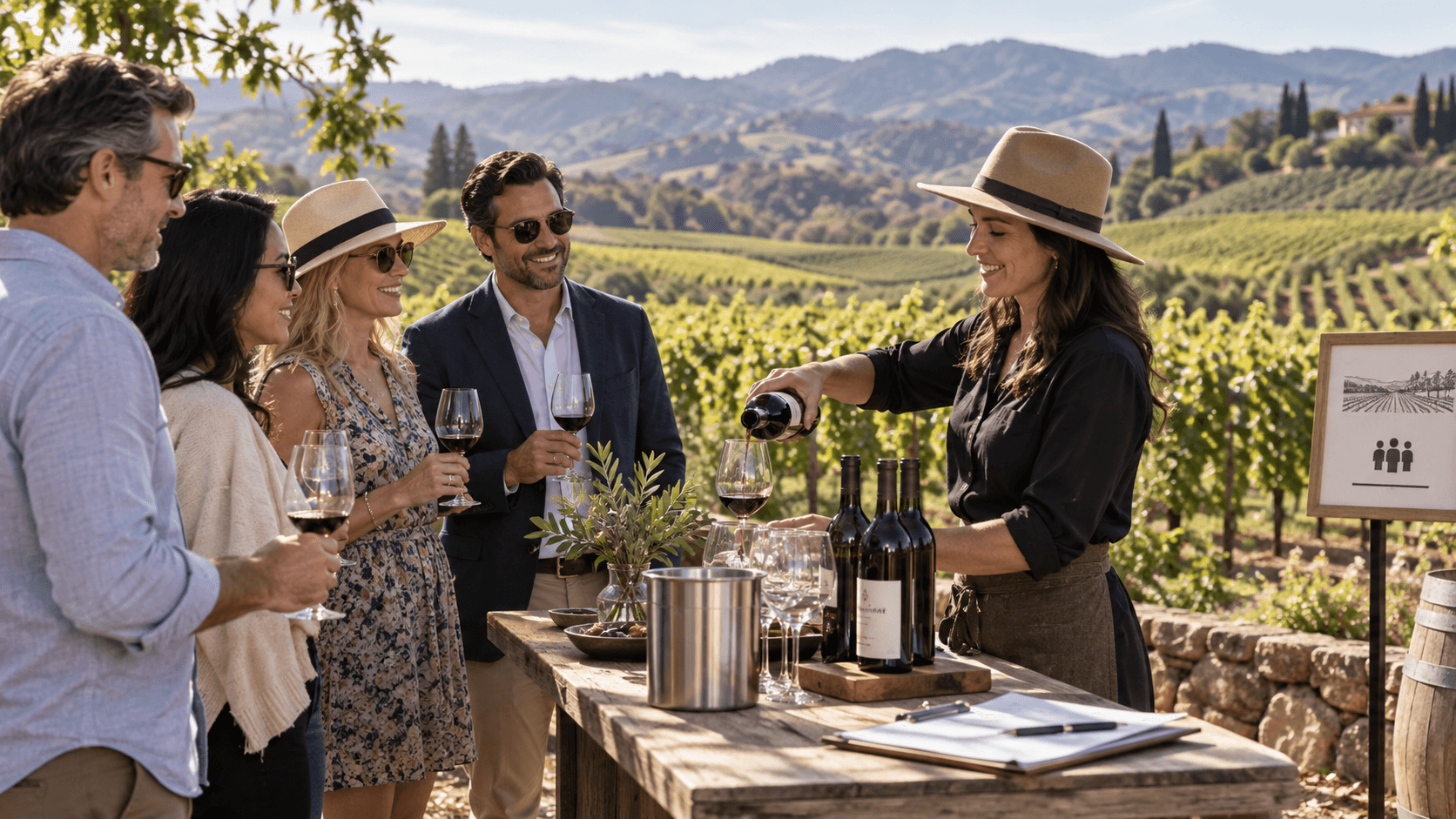
A new California law is giving winegrowers a way to bring visitors directly into their vineyards, something that could be especially valuable for smaller producers without traditional tasting rooms.
Assembly Bill 720 took effect January 1 and created a new “Estate Tasting Event Permit” for licensed winegrowers. The state program allows up to 36 tasting events per year on qualifying vineyard properties, giving growers another way to connect directly with customers at a time when both wine sales and tourism have been under pressure.
In Napa County, though, those tastings come with additional conditions.
The county’s pilot program limits each event to 49 people, including staff, requires events to take place outdoors and during daylight hours, and caps traffic at fewer than 40 average daily vehicle trips. Agricultural roads must also maintain at least 14 feet of clear emergency access, and events cannot be held during Red Flag Warning days. Growers pay a $343 annual county permit fee in addition to any state requirements.
One of the biggest points of contention is where the events can actually take place. Napa County says the program applies only to vineyard parcels that do not contain a winery production facility. That means a winery with vines surrounding its existing winery generally cannot simply move tastings out among those vines under this permit. Industry advocates have argued that the state law was intended to be broader than Napa County’s interpretation.
That distinction matters because the new law was seen as particularly helpful for small producers that make wine through custom-crush facilities and have struggled for years to gain permission to host customers at their vineyards. When Napa County first developed its rules last year, officials considered even tighter limits, including just 15 guests and mandatory shuttling, before adopting the current 49-person standard.
The county describes its approach as a pilot program focused largely on fire safety, emergency access and existing land-use rules. It is scheduled to run through July 1, 2027, unless the Board of Supervisors extends it.
For Napa Valley growers, the result is something of a compromise: a new way to bring customers into the vineyard, but not quite the open-ended flexibility some had hoped the state law would provide. The debate also lands in the middle of a broader conversation about whether Napa County’s decades-old winery regulations still fit the realities of today’s wine business. |
7 Comments
Join the conversation
The traffic limits make sense for rural roads, but it’s a shame that growers with production wineries nearby can’t use this permit.
As a wine lover, I’d love to visit smaller vineyards that usually don’t host tastings. This permit is a step in the right direction.
I like the idea of tastings outdoors in the vineyard, it feels more authentic. But 36 events a year isn’t very often.
Thanks for sharing your thoughts! While 36 events might seem limited, it does give smaller producers a meaningful opportunity to connect with visitors in a unique vineyard setting.
Why does Napa County have to add so many extra restrictions? The state law seems clear enough. They should relax a bit.
This new permit could really help smaller growers. Not everyone can build a fancy tasting room, so this is a nice alternative.
I appreciate the effort for fire safety but limiting events to 49 people seems too restrictive for small wineries to really benefit.